Source copper motor evaporative cooler for Factory, Shop, Room
Compare 30 copper motor evaporative cooler units from verified Chinese suppliers. Buyers can evaluate specifications like cooling capacity, noise levels, and energy efficiency for industrial, commercial, and room applications.
Key considerations
Products List



Comprehensive Sourcing Guide
Strategic Sourcing Guide for Copper Motor Evaporative Coolers
Understanding the Technical Landscape of Evaporative Cooling Systems
When sourcing equipment described as a copper motor evaporative cooler, buyers must first navigate the complex terminology often used in global B2B marketplaces. The core keyword suggests a specific configuration where electric motors, potentially utilizing copper windings for efficiency, drive the fan systems within an evaporative cooling unit. However, the actual product data available reveals a broader spectrum of equipment, ranging from floor-standing air conditioners to large-scale industrial evaporative condensers. The technical specifications indicate that these units are primarily designed for "Cooling Only" applications and operate on an "AC" power source with an "Electrical" power supply.
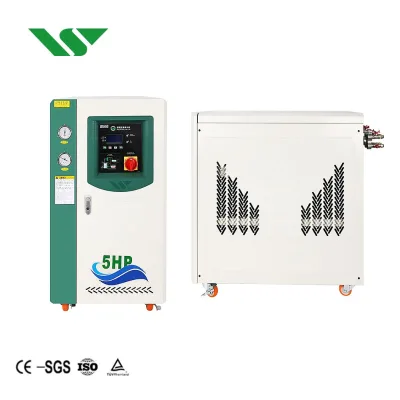
The physical configuration of these units varies significantly based on the intended application. For smaller commercial or room-based needs, the data points to "Floor Standing Air Conditioners" with a "Vertical" structural form. These units typically feature an "Effective Area" of 20-30 square meters and are equipped with a "Remote Control" and "Timer" functionality. In contrast, the industrial segment includes "Evaporative Condensers" and "Refrigerant Evaporative Coolers" designed for factories and business shops. These larger units boast substantial air flow capacities, with observed data indicating a capacity of up to 8000 cubic meters per hour. The heat rejection capabilities for these industrial units span a wide range, from 100 to 5000 kilowatts, depending on the specific model and configuration.
The construction materials are critical for durability and performance. The casing for heavy-duty units is often fabricated from Stainless Steel (SS), Superdyma, or Hot-Dip Galvanized (HDG) steel. The internal coil components are similarly specified as SS or HDG steel to resist corrosion in harsh environments. The cooling mechanism relies on a "Water-Cooled" condensation form, utilizing a "Spraying Pump" designed for low head lift and large flow to ensure efficient heat transfer. The fan systems are typically "Axial Flow Type" and "Low Noise Type," driven by motors from reputable manufacturers such as Weg or Siemens. This attention to component selection ensures that the system maintains an "Ultra Low" noise level while operating at high efficiency.
Compliance, Certification, and Energy Efficiency Standards
Navigating the regulatory landscape is a pivotal step in the procurement process for industrial cooling equipment. Buyers must verify that the supplied units meet the necessary international and regional standards. The available product data explicitly lists "CE" certification as a standard attribute for the units, indicating compliance with European health, safety, and environmental protection standards. For more comprehensive validation, some models are noted to carry both "ISO" and "CE" certifications, suggesting adherence to international quality management systems alongside specific product safety regulations.
Energy efficiency is another critical compliance factor, particularly for large-scale industrial operations where energy costs are a significant operational expense. The product specifications reference the "China Energy Efficiency Standard," with specific units achieving "Level 2" status. This classification is vital for buyers operating in regions where energy efficiency ratings dictate procurement eligibility or tax incentives. The data also notes a "Level Condition: New" for the energy efficiency standard, implying that the units are manufactured to current, up-to-date efficiency benchmarks rather than legacy standards.
When evaluating suppliers, procurement teams should request documentation that confirms these certifications are current and applicable to the specific model number being purchased. For instance, the model "GL03-ZY13A" and "GL08-ZY13A" are associated with specific dimensions and certifications. It is essential to ensure that the "China Energy Efficiency Standard" rating provided in the documentation matches the actual unit delivered, as efficiency levels can vary between production batches. Furthermore, buyers should verify that the "CE" mark is not merely a claim but is supported by valid test reports and conformity assessments, especially if the equipment is destined for export to the European market.
Cost Drivers and Pricing Variables in Evaporative Cooler Procurement
The pricing structure for evaporative cooling systems is influenced by a multitude of technical and logistical factors. The observed price range for these products in the market spans from $1 to $8,600 USD, a variance that reflects the vast difference between small residential or light commercial units and massive industrial condensers. The primary cost driver is the heat rejection capacity. Units capable of rejecting between 100 and 5000 kilowatts will naturally command a higher price point than those designed for smaller effective areas of 20-30 square meters.
Material composition plays a significant role in cost determination. The use of Stainless Steel (SS) for casings and coils is more expensive than standard galvanized steel but offers superior corrosion resistance, which is crucial for units operating in humid or coastal environments. Similarly, the choice of motor brand, such as Weg or Siemens, impacts the overall cost. These high-quality motors are more expensive than generic alternatives but provide better reliability and longer service life, reducing the total cost of ownership.
Packaging and shipping logistics also contribute to the final price. The data indicates that smaller units are packed in "Carton" boxes, while larger industrial units are packed in "Container Export" or "Container" formats. The dimension of the units, such as the 515x350x1170mm size for smaller models and 756x570x1380mm for larger ones, directly affects shipping volume and freight costs. Additionally, the "MOQ" (Minimum Order Quantity) ranges from 1 to 1000 units, meaning that buyers purchasing in bulk may negotiate better pricing, while those ordering single units may face higher per-unit costs. Buyers should also consider the "Customization: Available" attribute, as bespoke modifications to the standard design will inevitably increase the procurement cost.
Typical Applications and Operational Scenarios
The versatility of evaporative cooling systems allows them to serve a wide array of applications, from small commercial spaces to large industrial complexes. The product data highlights "Room" usage for smaller floor-standing units, making them suitable for offices, retail shops, and small workshops where space is limited and aesthetic integration is important. These units are designed to be "Floor Standing" and "Vertical," fitting seamlessly into existing building layouts without requiring complex installation infrastructure.
For larger scale operations, the "Industrial" and "Commercial" applications are the primary focus. The data specifies usage in "Factory" and "Business Shop" environments, where high heat loads and large air volumes are common. The "Refrigeration System" application is another key scenario, where the evaporative condenser acts as a critical component in the cooling cycle, rejecting heat from the refrigerant to the atmosphere. The "Air Flow" capability, which can be configured as "Counter Flow or Cross Flow," allows these units to be optimized for specific airflow requirements within a facility.
The "Drift Eliminator" and "Infill" design are particularly relevant for applications where water conservation and environmental compliance are paramount. The observed "Drift Rate" of less than 0.002% indicates that these units are designed to minimize water loss, which is a significant operational cost and environmental concern. The "Draft Type" is specified as "Induced Draft," which is ideal for applications where the exhaust air needs to be directed away from sensitive equipment or pedestrian areas. Buyers should match the specific application requirements, such as noise sensitivity or space constraints, with the unit's attributes like "Ultra Low" noise levels and compact dimensions.
Supplier Evaluation and Quality Assurance Protocols
Evaluating suppliers for evaporative cooling equipment requires a rigorous approach to ensure that the delivered products meet the specified technical and quality standards. The first step is to verify the supplier's ability to provide the exact model numbers and specifications observed in the market, such as "GL03-ZY13A" or "KEN." Buyers should request detailed technical datasheets that confirm the "Prod Standard" dimensions, "Certification" status, and "Condition" of the units.
Quality assurance should extend beyond the initial product inspection to include the manufacturing process. Buyers should inquire about the sourcing of key components, such as the "Weg/Siemens Motors" and the "SS/HDG Steel" coils. The use of high-quality materials like "Superdyma" for casings and "CPVC/PP" for drift eliminators is a strong indicator of a supplier's commitment to quality. Additionally, the "Spraying Pump" specifications, described as "Low Head Lift, Large Flow Type," should be verified to ensure they meet the hydraulic requirements of the specific application.
The "Prod Packing" method is another area of focus. Whether the units are packed in "Carton" or "Container" formats, the packaging must be robust enough to prevent damage during transit. For international shipments, the "Dimension: Suitable to Container Shipping" attribute is crucial for logistics planning. Buyers should also assess the supplier's ability to handle "Customization" requests, as many industrial applications require tailored solutions. Finally, the "Condition: New" status must be confirmed through visual inspection and documentation to ensure that no refurbished or used units are being sold as new.
Long-Term Procurement and Maintenance Considerations
Sourcing evaporative cooling systems is not just a one-time transaction but a long-term investment that requires careful planning for maintenance and lifecycle management. The "Water-Cooled" nature of these units means that water quality and treatment are critical factors in long-term performance. Buyers should consider the "Drift Rate" and "Infill" design when planning water treatment strategies to minimize scaling and corrosion. The "Low Noise Type" fans and "Axial Flow" designs also require regular maintenance to ensure they continue to operate efficiently and quietly over time.
The "Timer" and "Remote Control" features add a layer of operational convenience, but they also introduce electronic components that may require periodic checks or replacement. Buyers should establish a maintenance schedule that includes cleaning the "Air Inlet" grilles, inspecting the "Spraying Pump" for wear, and verifying the integrity of the "Drift Eliminator." The "China Energy Efficiency Standard" Level 2 rating suggests that the units are designed for long-term efficiency, but this can only be maintained through proper upkeep.
Furthermore, the "Heat Rejection" capacity of 100-5000kw indicates that these units are designed for heavy-duty use. Buyers should plan for potential upgrades or expansions, especially if the facility's cooling load is expected to increase. The "Customization: Available" attribute suggests that suppliers may offer retrofitting options or additional modules to enhance the system's capabilities. By understanding these long-term considerations, buyers can ensure that their investment in evaporative cooling systems delivers consistent performance and value over the lifespan of the equipment.
Comparative Analysis of Product Specifications
To facilitate informed decision-making, the following table summarizes the key specifications observed across the different product categories, highlighting the distinctions between smaller commercial units and large industrial condensers.
| Feature | Small Commercial Unit (e.g., GL03-ZY13A) | Large Industrial Unit (e.g., KEN) |
|---|---|---|
| Type | Floor Standing Air Conditioner | Evaporative Condenser |
| Effective Area | 20-30 Sq.M | N/A (Industrial Scale) |
| Heat Rejection | N/A | 100-5000kw |
| Air Flow Capacity | N/A | 8000m3/H |
| Dimensions | 515x350x1170mm | 100kw to 5000kw (Capacity based) |
| Casing Material | Standard | SS/Superdyma/HDG |
| Motor Brand | Standard | Weg/Siemens |
| Certification | CE | ISO, CE |
| Packing | Carton | Container Export |
| Application | Room, Factory, Business Shop | Industrial, Refrigeration System |
This comparison underscores the importance of matching the specific application needs with the correct product specifications. While the smaller units are ideal for localized cooling in commercial spaces, the large industrial units are designed for high-capacity heat rejection in complex refrigeration systems. Buyers must carefully evaluate these differences to ensure they select the right equipment for their specific operational requirements.
FAQs
What certifications do copper motor evaporative coolers have?
These units typically carry CE certification, and some models also include ISO certification. This ensures compliance with European safety standards and international quality management systems for industrial applications.
Which power type drives these evaporative cooling systems?
The equipment operates on an AC power source with an electrical supply. This configuration supports both small floor-standing units and large industrial condensers requiring consistent energy input.
Can these coolers be customized for specific industrial needs?
Yes, customization is available for these units to meet unique application requirements. Buyers can request modifications to fit specific factory or commercial shop environments while maintaining performance standards.
How is the noise level managed in these cooling units?
The systems are designed with ultra-low noise levels using axial flow fans. This feature makes them suitable for environments where sound control is critical, such as offices or residential-adjacent areas.
What is the effective area coverage for floor-standing models?
Floor-standing air conditioners cover an effective area of 20 to 30 square meters. These units are ideal for rooms, business shops, and small commercial spaces requiring direct cooling.
Which materials are used for the casing and coils?
Casings are fabricated from Stainless Steel, Superdyma, or HDG steel for durability. Internal coils similarly use SS or HDG steel to resist corrosion in harsh industrial and commercial cooling environments.